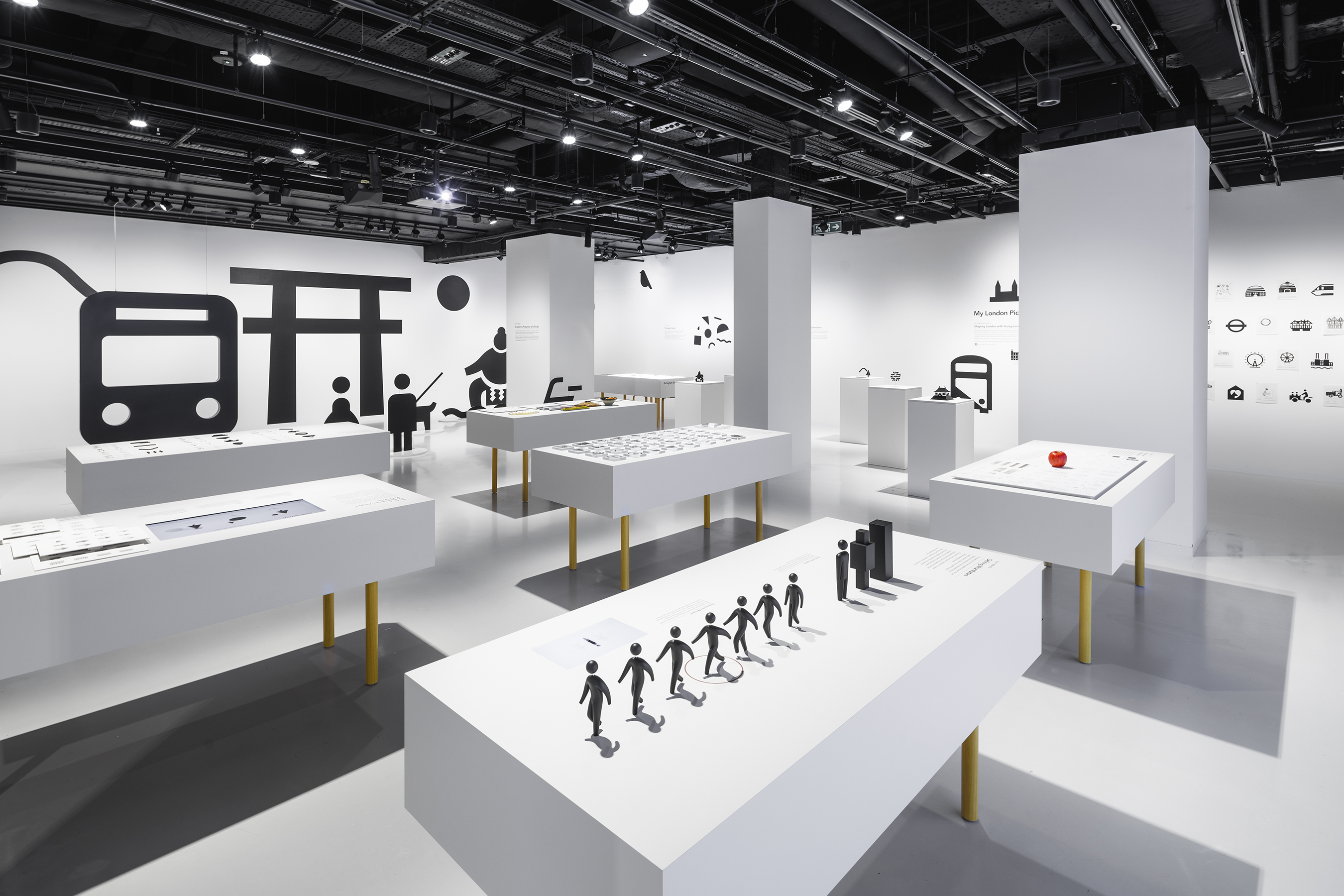
Making of Pictograms Exhibition
July 2025 saw the launch of the touring exhibition “Pictograms: Iconic Japanese Designs” at Japan House London, the European hub of Japan House, a Japanese Ministry of Foreign Affairs cultural initiative with locations in three major international cities. Following the London show, the exhibition traveled to Los Angeles in February 2026 and is scheduled to go to São Paulo in November of the same year.
Here, we take you on a brief journey behind the scenes at the London venue, from installation to opening day.
Japan House London features a beautiful shop on the ground floor and a staircase that descends to the underground gallery space—a space the team spent about a week transforming into the “Pictograms” exhibition. Let’s dive right in!
Day one began with unloading and unpacking. The exhibition fixtures and artworks produced in Japan were finally unboxed in London after spending three months at sea. Fixtures were packed down for transport with their legs removed and stored inside the structures to save space. Once unpacked, the first job was to reassemble each piece, then position the completed fixtures and artworks according to the exhibition plan, all the while checking for any scratches or damage sustained during transit.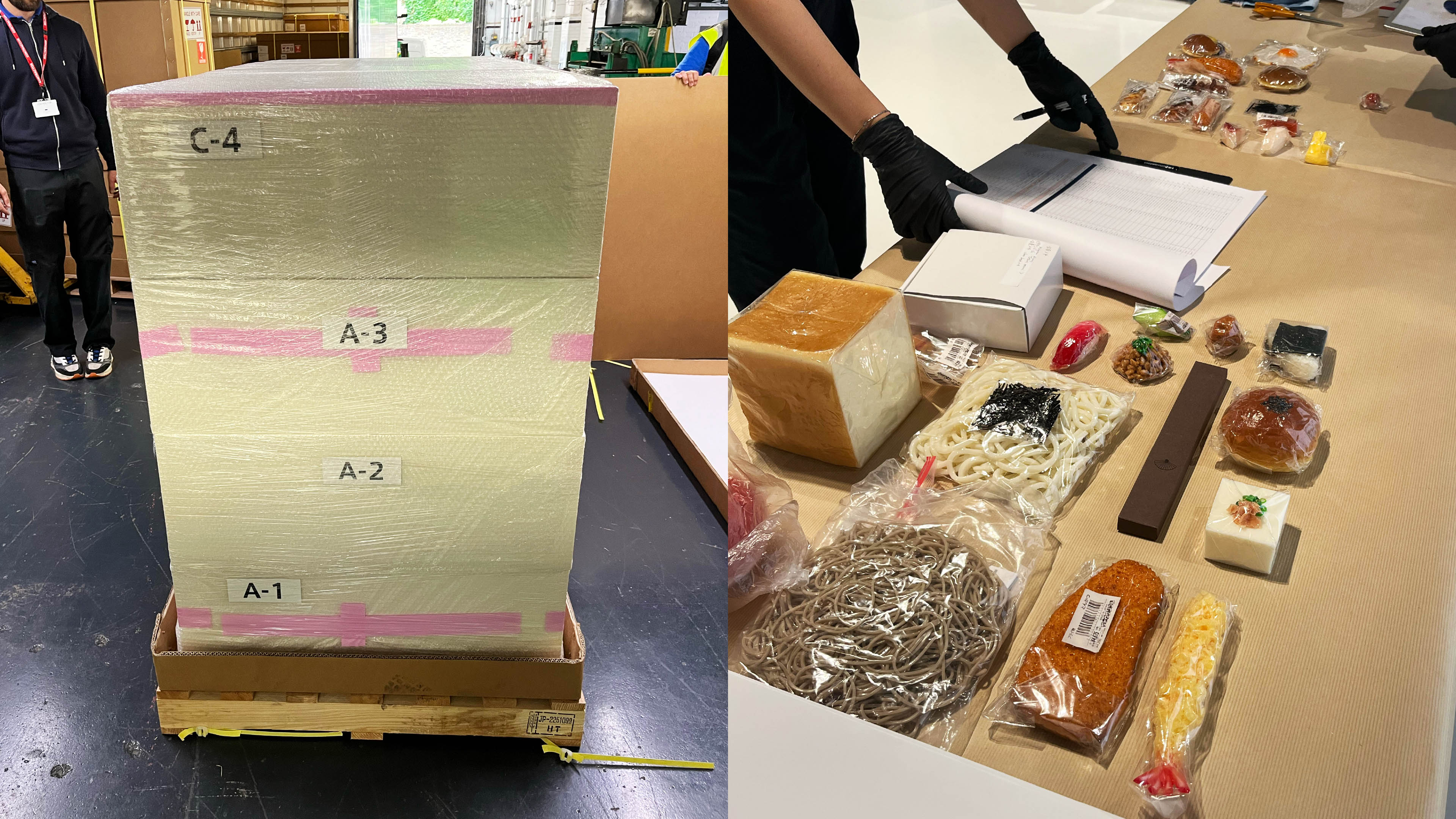
Next came the application of vinyl lettering and graphics.
Here, the ground-floor display windows are being treated. The team repeatedly stepped outside to check how the graphics would look to people passing by and to make small adjustments.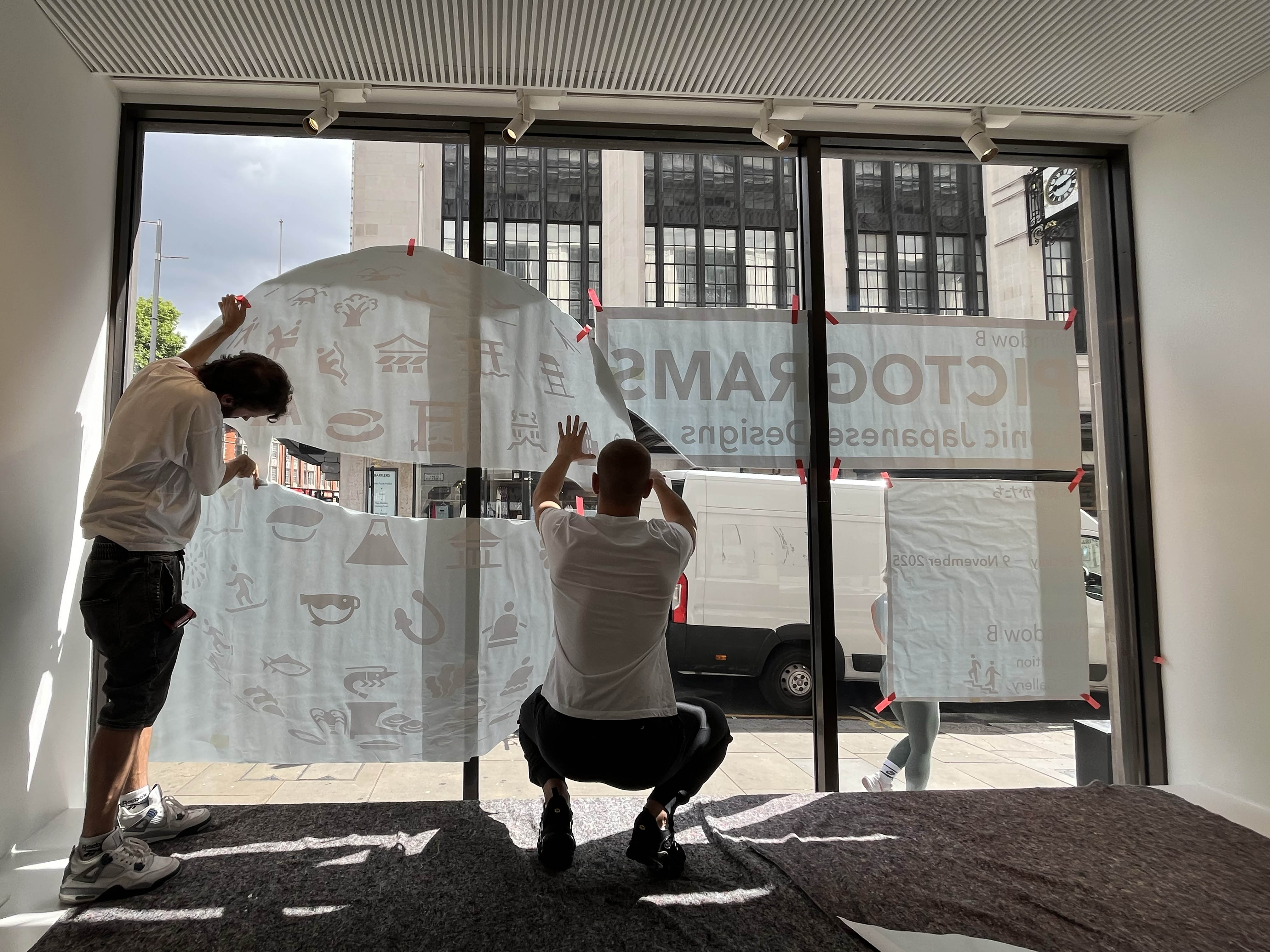
After some trial and error, the striking façade was ready—and soon catching the eye of passersby walking along the busy street.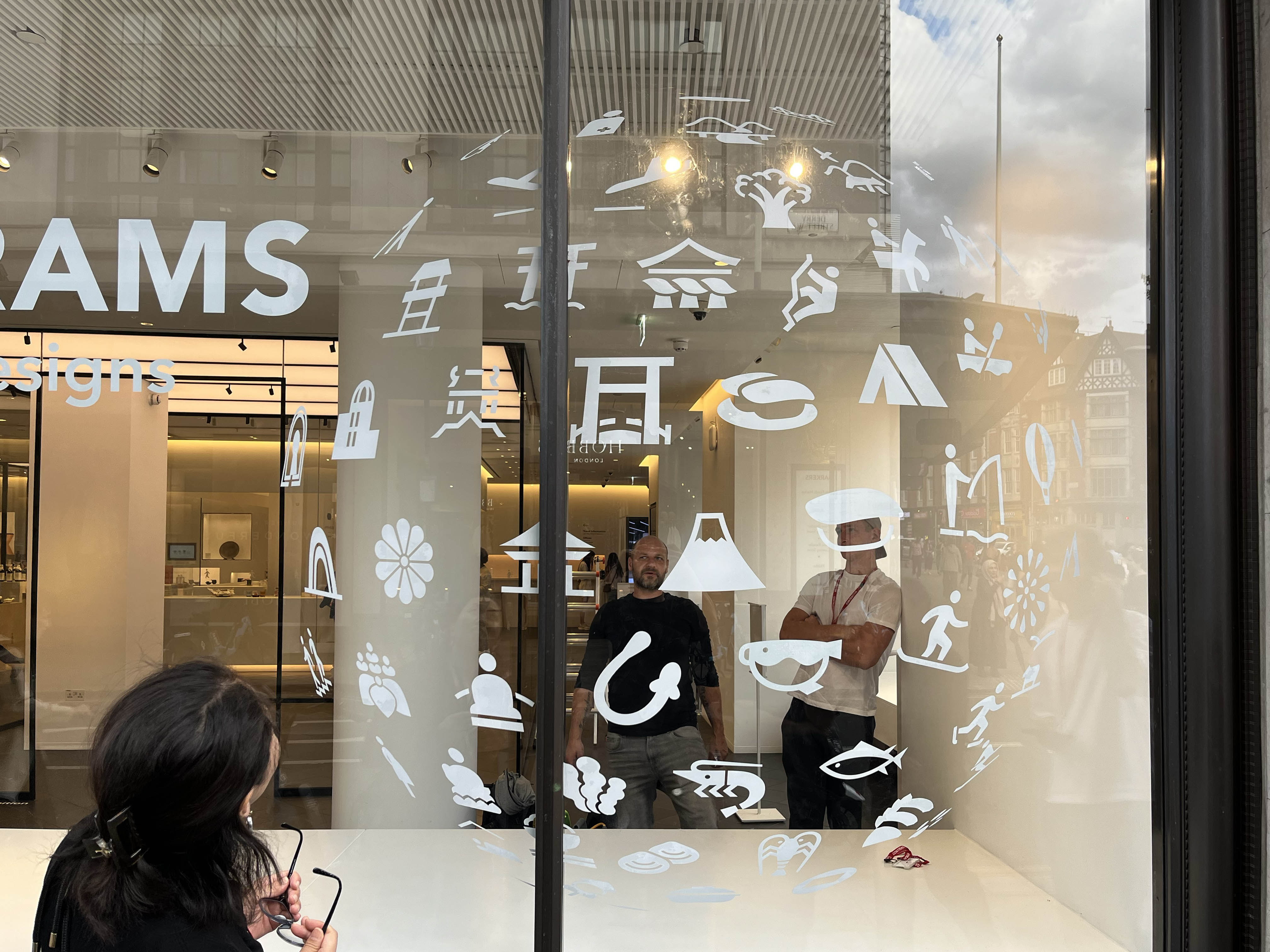
Meanwhile, a familiar-looking foursome was positioned at the gallery entrance.
These pictograms are actually inspired by the cover photograph of the Beatles’ iconic album Abbey Road. Among the more playful works in the exhibition, they often caught the attention of visitors, many of whom would stop for a closer look.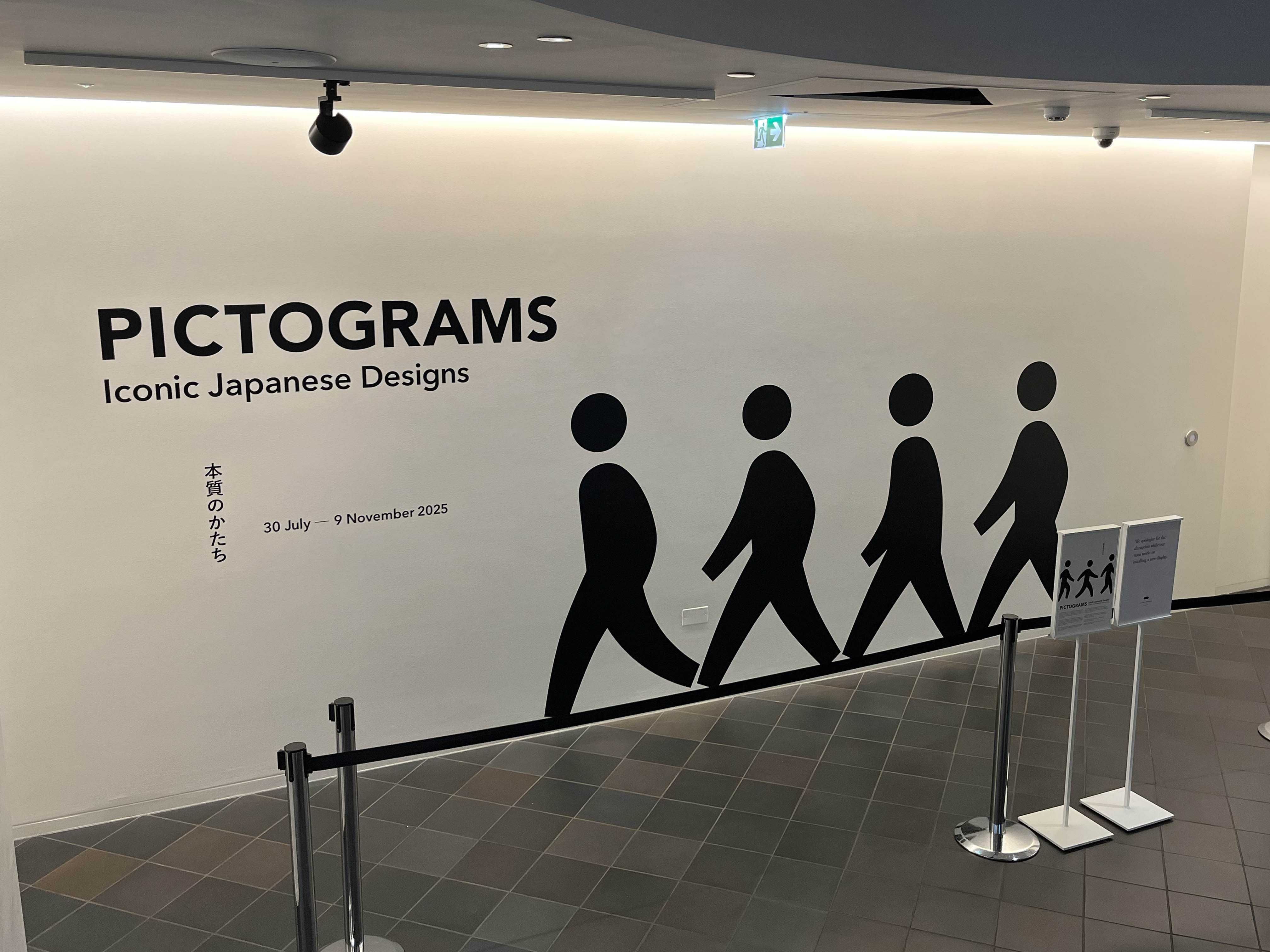
With the exhibition furniture in place, titles and explanatory text were applied to the blank display surfaces.
For this, dry-transfer lettering, known in Japanese as inreta*, short for “instant lettering,” was used.
Each character had to be carefully positioned, keeping everything aligned both horizontally and vertically. It may not look like the most exciting part of the job, but this precision makes a real difference to the overall visual quality of the exhibition.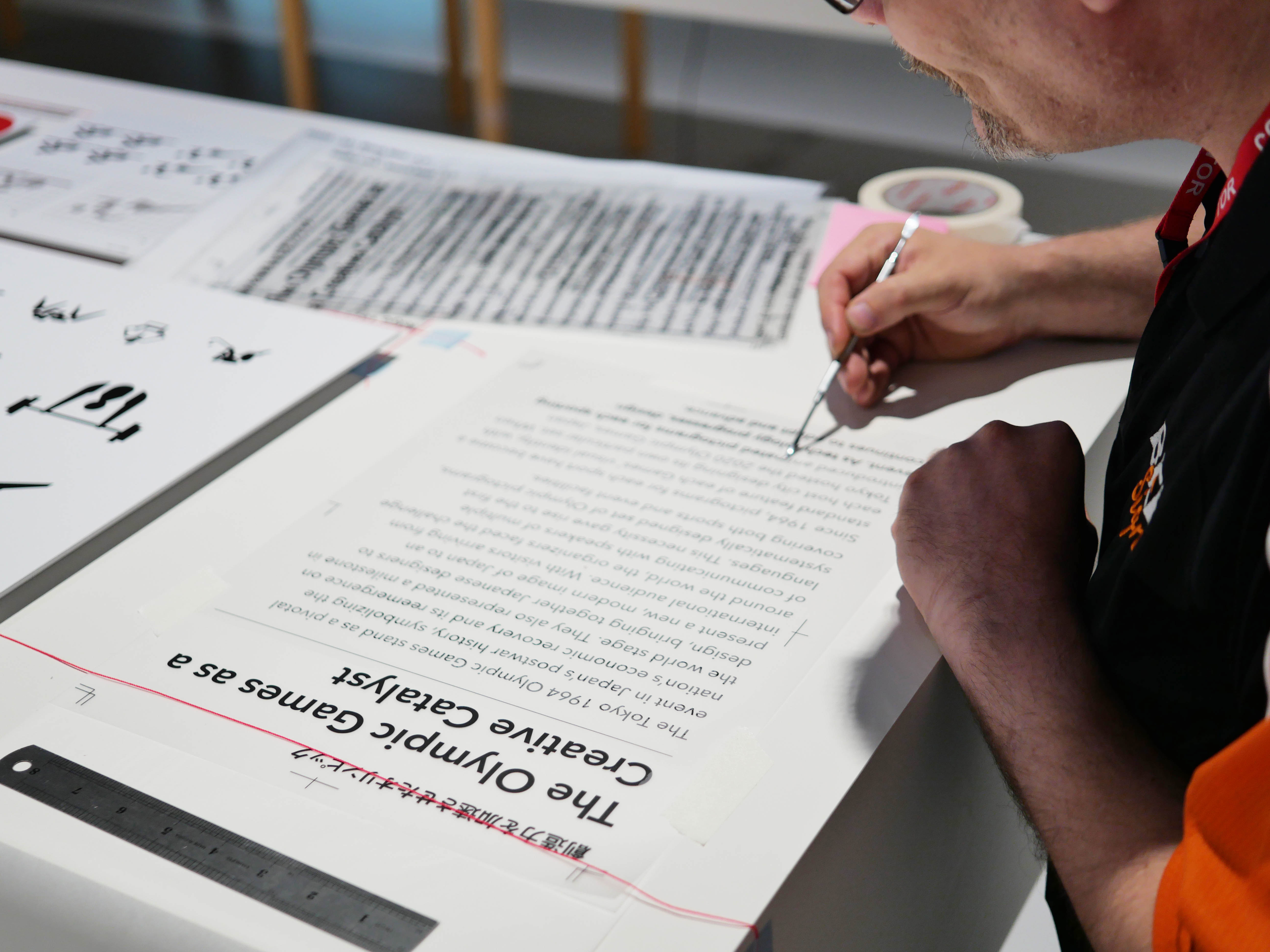
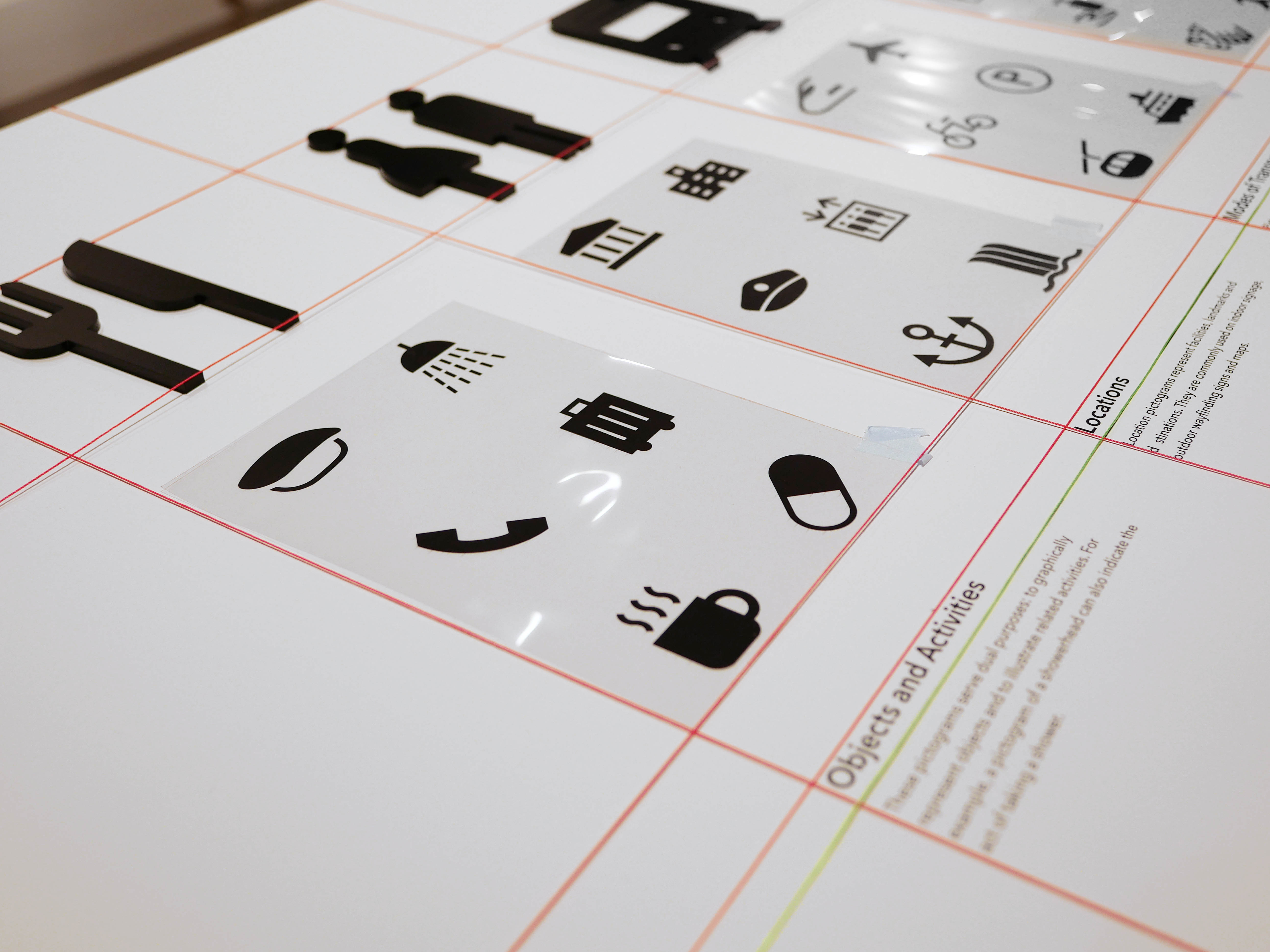
Once the monitors were installed, the exhibition began to come to life.
Finally, the text and pictograms that had been temporarily positioned on the gallery walls were affixed as the team checked their overall balance within the space. After a few finishing touches and adjustments to the lighting, video, and exhibits, the show was finally ready to open.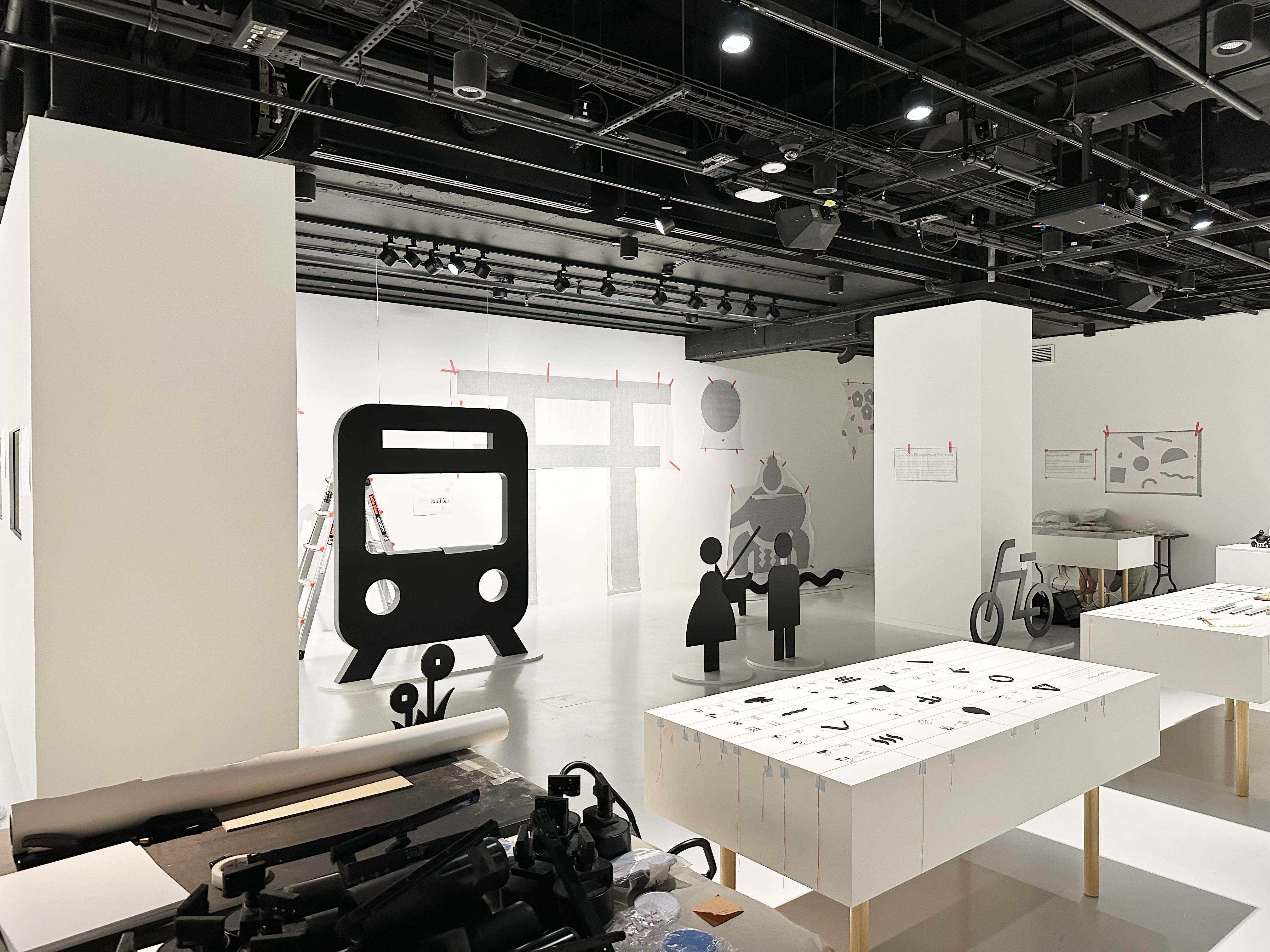
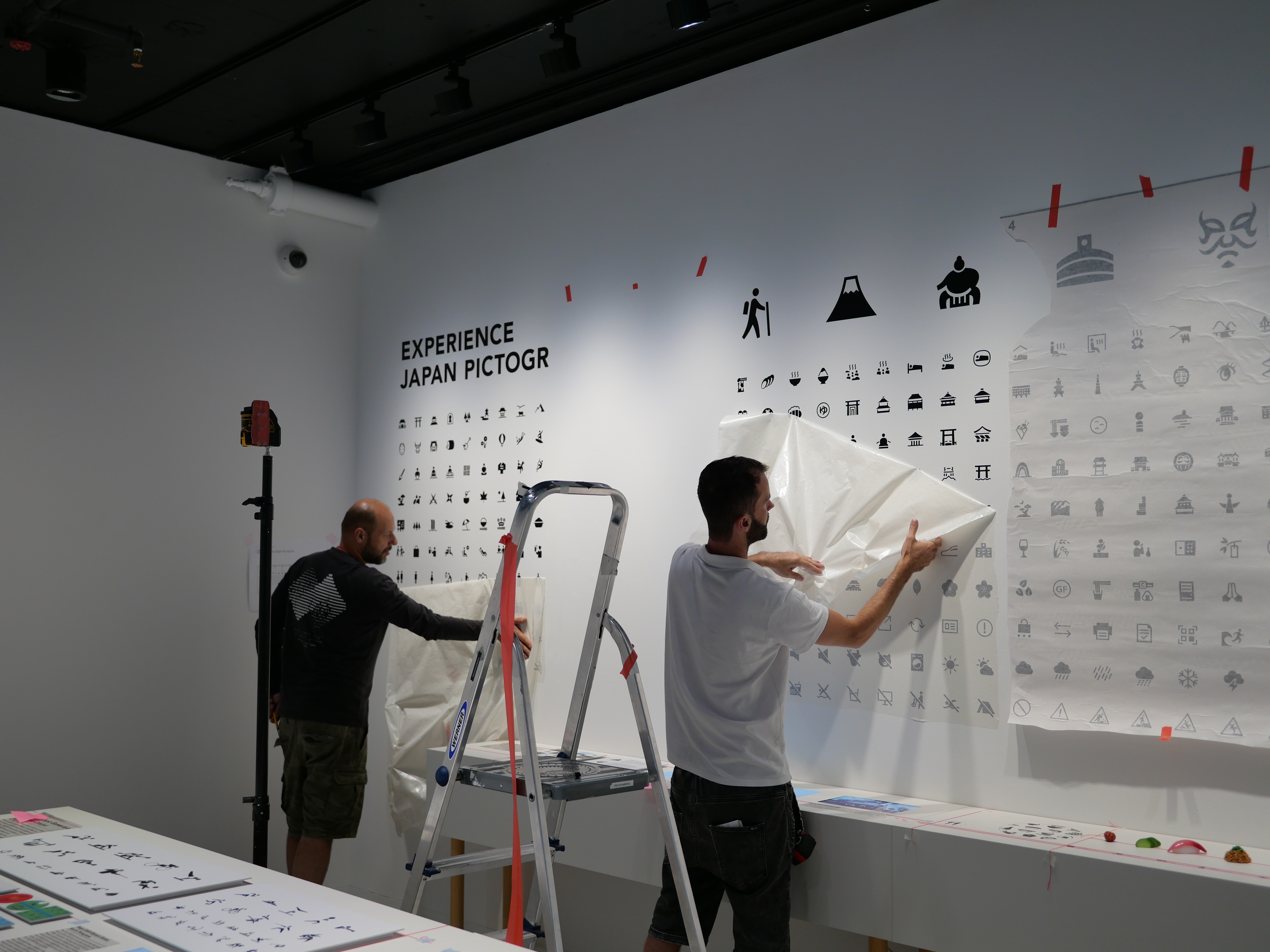
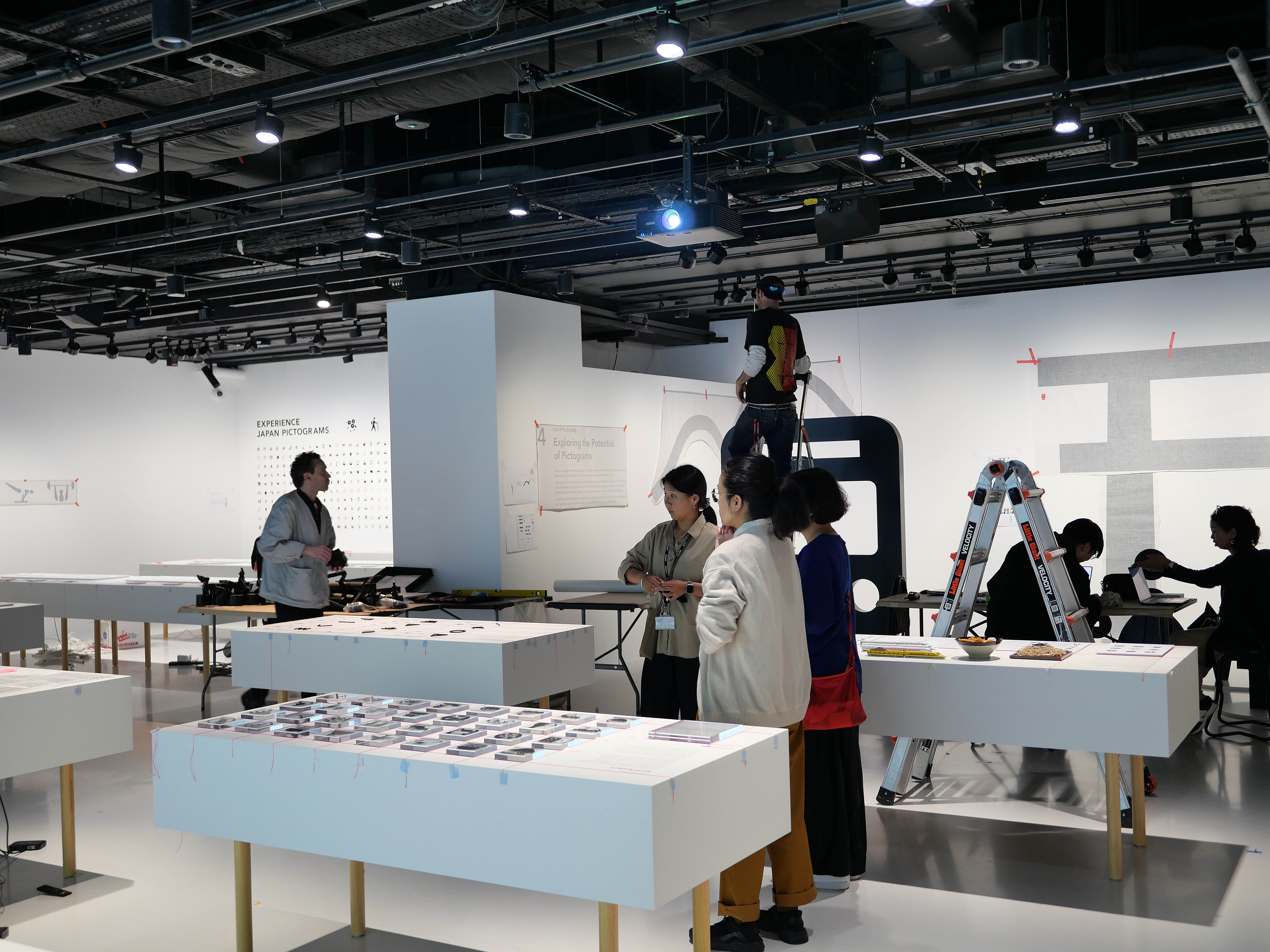
In just a short period of time, a blank space was transformed into a complete exhibition.
Behind this transformation lay the painstaking work of many people, along with countless careful adjustments to perfect every detail.
We hope this glimpse behind the scenes inspires you to appreciate not only the beauty of the exhibits but also the intricate process of staging an exhibition—and that this insight will enrich your future exhibition experiences.