
What are the pictograms?
At train stations and airports, on road signs and smartphone screens—even on your car’s dashboard…pictograms surround us to tell us what we need to know without using a single word.
Their appeal? They get the message across at a glance, sharing relatable information with people of different ages and nationalities, no matter what language they speak.
EJP (Experience Japan Pictograms) groups this wide variety of pictograms into six categories based on their features and functions. Let’s explore each one and take a closer look at the world of pictograms—you’d be pleasantly surprised with their depth and breadth.
1. Objects and Activities
Pictograms representing people, objects, and activities.
From showers and meals to sports, they help us intuitively recognize everyday activities and the facilities we use. Even the most familiar objects and activities still take careful thought and planning to translate them into easy-to-read symbols. The key is simplification: deciding which details to leave out and which to keep.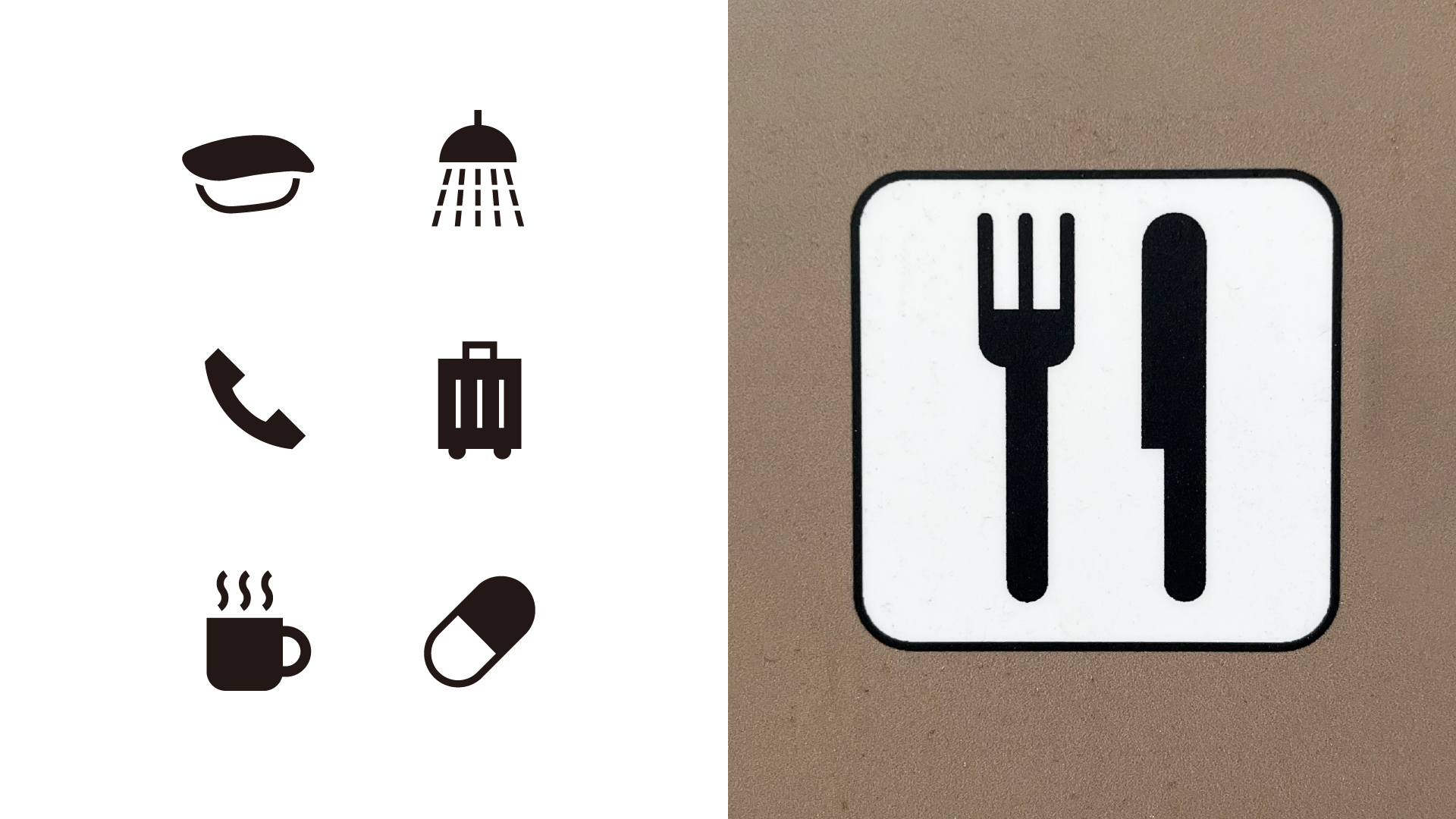
2. Places
Pictograms that represent facilities, destinations, and landmarks.
From train stations and hospitals to parking lots and tourist information centers, they help us find our way to where we want to go. Getting lost can sometimes lead to some unexpected discoveries, but most of the time, it’s easier not to get lost in the first place.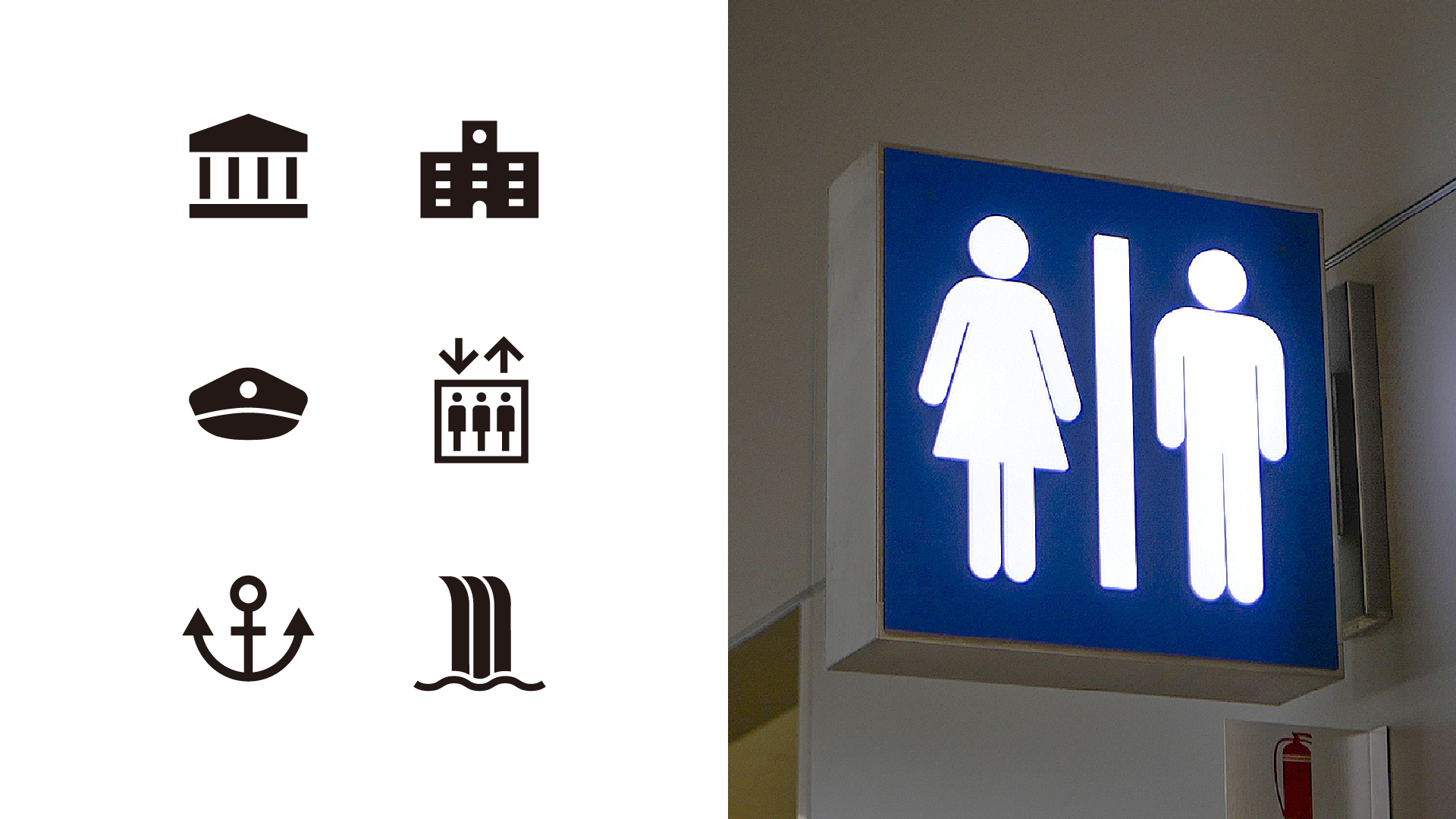
3. Modes of Transport
Pictograms that represent ways to get around, from planes and trains to buses and boats.
Found in airports, train stations, and bus terminals, these pictograms make it easier to work out where you’re headed and where to board, even if you don’t speak the local language. Providing these pictograms might itself be a form of hospitality—a small but meaningful gesture to help travelers feel welcome.
4. Instructions
Pictograms that show people what to do, such as “go this way,” “wash your hands,” or “wear a helmet.”
Used in many facilities, they help improve both safety and convenience. They also make local customs and etiquette easier to understand—after all, what counts as good manners can vary from one culture to another.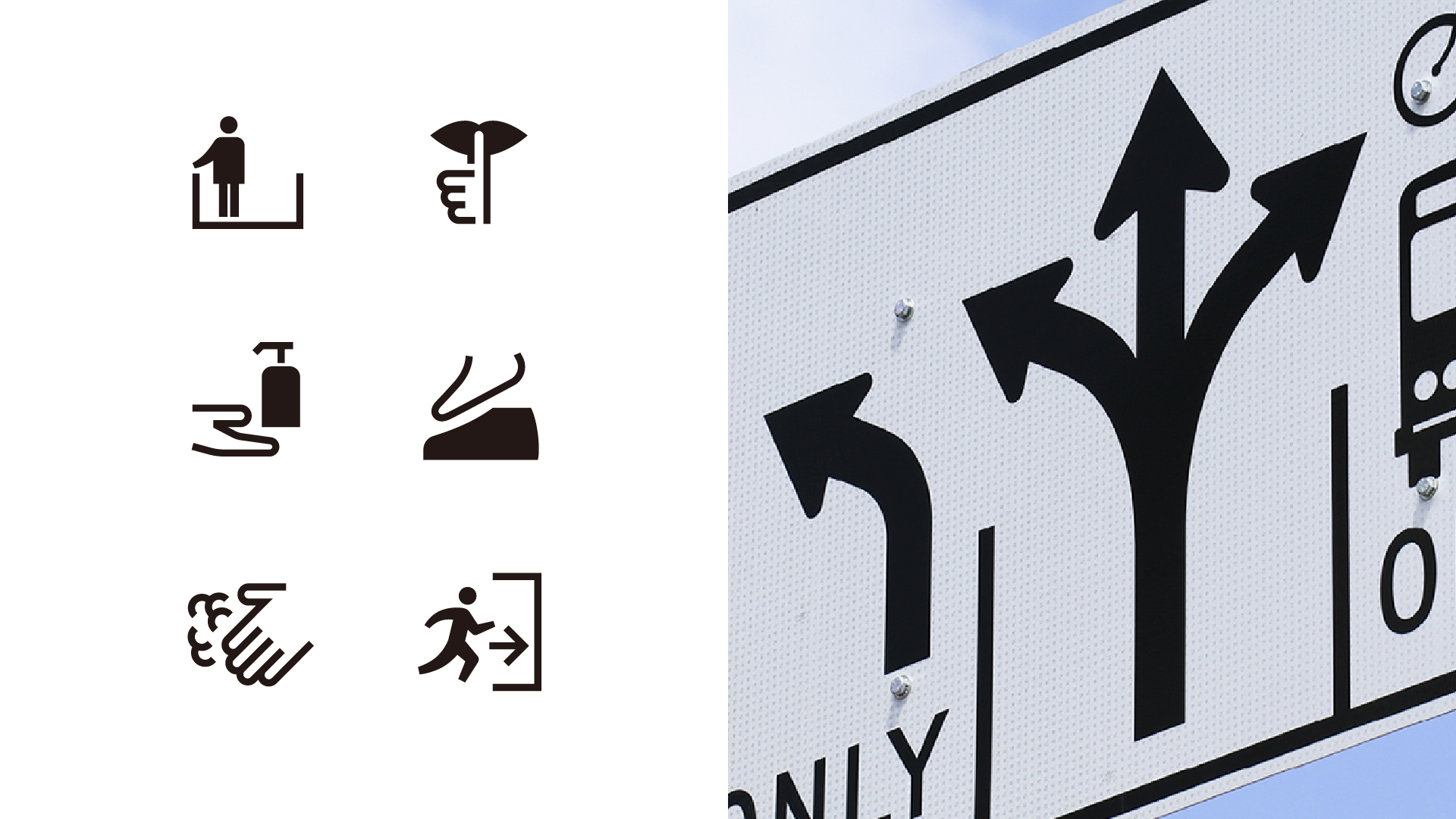
5. Warnings and Prohibitions
Pictograms that alert us to dangers or tell us what’s not allowed.
Warnings often appear inside a triangle, while prohibitions commonly use a red circle crossed by a diagonal line—visual cues designed to catch our attention at a glance. These symbols vary by country and region, but take a closer look at the “No” signs around you, and you’ll start to notice just how many rules keep society running.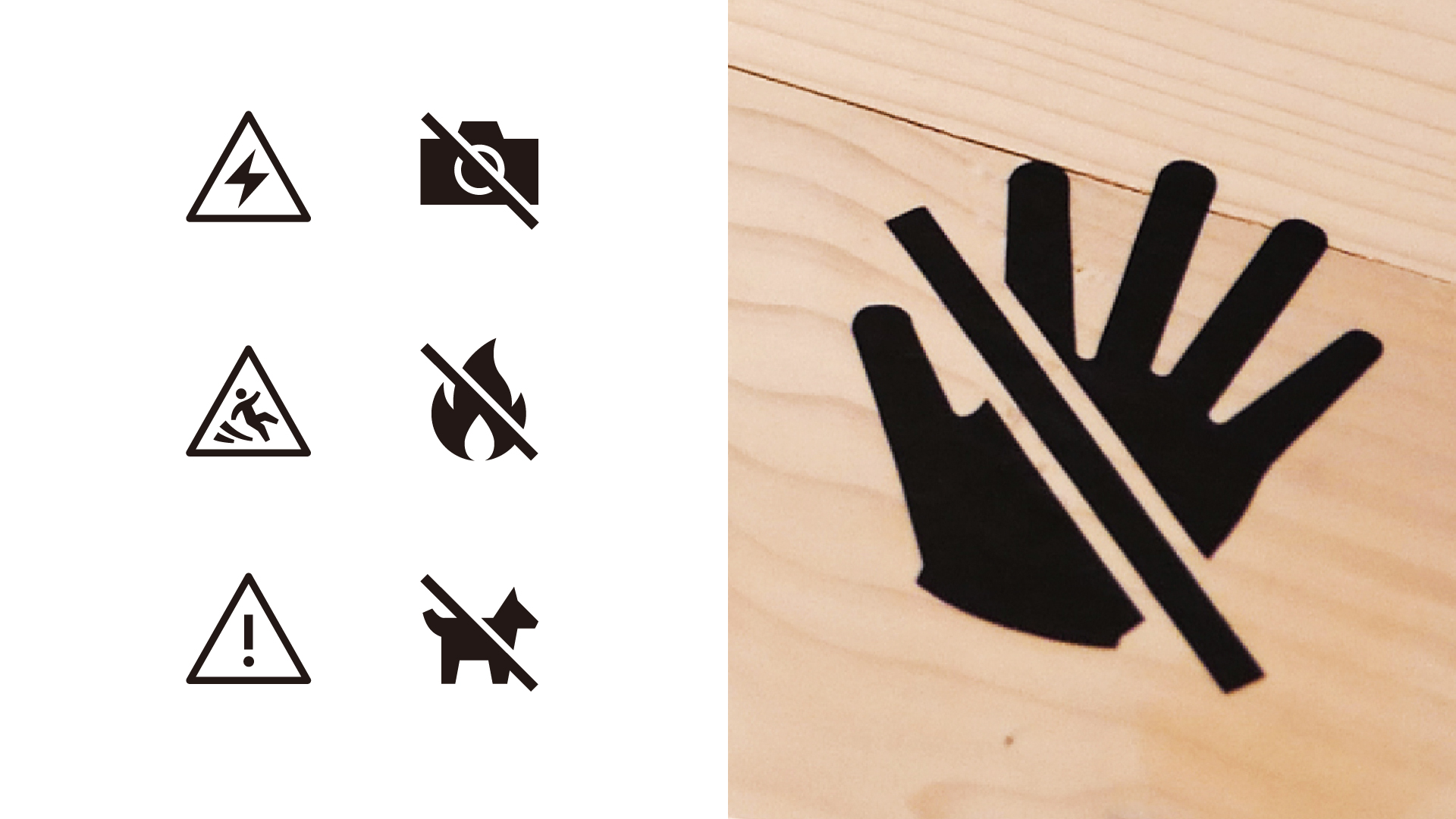
6. Concepts
Pictograms that give visual shape to intangible ideas and meanings, such as “Information,” “Wi-Fi,” “Peace,” and “SOS.”
They communicate abstract ideas through simple designs that are easy for everyone to understand. Turning something that exists only in our minds into something we can see and recognize is a challenging but rewarding task.
Looking at these categories, we can see that pictograms are more than just icons—each has a clear purpose.
Take a closer look at the pictograms you come across in everyday places. Once you start noticing their meanings and the design choices behind them, you might find a new way to enjoy even the most familiar surroundings.